Rounding at Rush spotlights the work of physicians across the Rush University System for Health, comprised of two community hospitals and Rush University Medical Center, which is ranked by U.S. News & World Report as one of the nation’s best hospitals. As a leading health system, Rush delivers outstanding patient care, offers the latest treatments, educates the next generation of health care providers, and pursues groundbreaking research. Accreditation Statement In support of improving patient care, Rush University Medical Center is jointly accredited by the Accreditation Council for Continuing Medical Education (ACCME), the Accreditation Council for Pharmacy Education (ACPE), and the American Nurses Credentialing Center (ANCC), to provide continuing education for the health care team. This activity is being presented without bias and with/without commercial support. Designation Statement Rush University Medical Center designates this internet enduring material activity for a maximum of One (1) AMA PRA Category 1 Credit(s)™. Physicians should claim only credit commensurate with the extent of their participation in the activity. Disclosures The course director(s), planner(s), faculty and reviewer(s) of this activity have no relevant financial relationships to disclose.
Episodes

Mar 10, 2026
Mar 10, 2026
11 min
Rush clinicians provide coordinated, comprehensive and multidisciplinary care for patients with conditions such as amyotrophic lateral sclerosis, myasthenia gravis and muscular dystrophy, combining leading-edge medical care with expertise in early diagnosis and a full range of support services.
Madhu Soni, MD, is chief of the Division of Neuromuscular Medicine and director of the ALS Clinic at Rush University Medical Center.

Jan 22, 2026
Jan 22, 2026
17 min
Rush’s skull base surgery program brings specialists from neurosurgery, otolaryngology and other specialties together to care for patients with some of the most complex tumors and disorders of the skull base.
Clinicians review each case in a dedicated multidisciplinary setting to determine the safest and most effective surgical approach. The conversation highlights how Rush incorporates advanced endoscopic and open techniques to reduce operative time, streamline care and prioritize long-term neurologic function and quality of life.
Peter Papagiannopoulos, MD, is an ear, nose and throat doctor at Rush, specializing in rhinology and skull base surgery.
Stephan Munich, MD, is a neurosurgeon and the director of the Skull Base Neurosurgery program at Rush.

Dec 16, 2025
Dec 16, 2025
21 min
Rush University Medical Center’s newly established Dizziness Clinic brings together specialists in otolaryngology, neurology, audiology, and vestibular therapy to evaluate and treat patients with persistent or unexplained dizziness.
Co-directors Mohamed Elrakhawy, MD, an otolaryngologist, and Jesse Taber, MD, a neurologist, discuss how the clinic operates, why cross-disciplinary collaboration matters, and what diagnostic and therapeutic strategies are most effective for this challenging patient population.

Nov 3, 2025
Nov 3, 2025
15 min
Rush University Medical Center offers a comprehensive range of surgical options for patients with drug-resistant epilepsy and complex brain tumors, using advanced techniques that include stereo EEG monitoring, laser ablation, resection, and neuromodulation devices such as responsive nerve stimulation and deep brain stimulation.
Arka Mallela, MD, is an epilepsy neurosurgeon at Rush. He leads the epilepsy surgery and brain mapping practices where he evaluates and treats patients with drug-resistant epilepsy and brain tumors. In addition, Dr. Mallela specializes in removing difficult brain tumors located near areas that control speech, movement and cognition. He uses brain mapping techniques to safely remove as much of the tumor as possible while protecting these important functions.

Nov 3, 2025
Nov 3, 2025
24 min
As a level 4 epilepsy center, Rush University Medical Center meets the highest standards for seizure diagnosis and care. Rush clinicians treat patients with seizures and those who have drug-resistant epilepsy through optimized medical management, surgical evaluation, neuromodulation devices and innovative dietary treatments. Rush also offers specialized programs for women with epilepsy and operates Illinois' only Spanish-speaking epilepsy clinic to address health care disparities in the community.
Antoaneta Balabanov, MD, is a neurologist and chief of the Division of Epilepsy at Rush. In addition to providing medical, surgical and brain stimulation treatments for patients with epilepsy, Dr. Balabanov is involved in research clinical trials in these areas. She has special interest in alternative treatments of epilepsy, especially dietary treatments.

Sep 26, 2025
Sep 26, 2025
16 min
A diverse team of neurovascular specialists in Rush’s Comprehensive Complex Cerebrovascular Clinic provides interdisciplinary, comprehensive care for a variety of cerebrovascular conditions, including intracranial atherosclerosis, Moyamoya disease, carotid stenosis, vertebrobasilar insufficiency, neurovascular dissections and cerebral ischemia.
Stephan Munich, MD, is a neurosurgeon and the director of the Skull Base Neurosurgery program at Rush.
Dixon Yang, MD, MS, is a vascular neurologist who focuses on the diagnosis and management of cerebrovascular diseases.
Jun 5, 2025
Jun 5, 2025
30 min
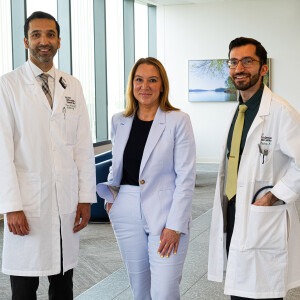
RUSH MD Anderson Cancer Center’s team of medical oncologists, thoracic surgeons and radiation oncologists works collaboratively to provide patients with advanced, comprehensive care for non-small cell lung cancer.
In this episode of Rounding at Rush, thoracic surgeon Nicole Geissen, DO, medical oncologist Koosha Paydary, MD, and radiation oncologist Gaurav Marwaha, MD, discuss their and other RUSH MD Anderson clinicians’ efforts diagnosing and treating non-small cell lung cancer.
In particular, they talk about RUSH MD Anderson’s novel lung cancer screening program, as well as innovative new therapies RUSH MD Anderson clinicians are using to improve patient outcomes.

May 5, 2025
May 5, 2025
11 min
Rush University Medical Center’s neurocritical care team treats patients with complex, emergent neurological conditions, providing them with advanced care that is available 24 hours a day, seven days a week.
In this episode of Rounding at Rush, Rajeev Garg, MD, chief of the Division of Neurocritical Care at Rush, talks about how Rush clinicians collaborate closely with stroke specialists and neurosurgeons to treat patients with a range of severe neurological injuries, including aneurysmal subarachnoid hemorrhage, intracerebral hemorrhage, large ischemic strokes, traumatic brain injuries, status epilepticus and spinal cord injuries.
“Time is brain. The longer an injured brain remains without treatment, the worse the damage and the worse the outcomes. As neurointensivists, our goal is to limit damage to the brain and provide patients the best possible outcomes for recovery.”

May 5, 2025
May 5, 2025
21 min
Rush cardiologists use sophisticated diagnostic and therapeutic tools and work in a collaborative, interdisciplinary manner to provide superior outcomes for patients with advanced heart failure.
Featured in this episode of Rounding at Rush are Tisha Suboc, MD, a cardiologist and the medical director of Advanced Heart Failure at Rush, and Karolina Marinescu, MD, a cardiologist and the director of the Infiltrative Cardiomyopathy Program at Rush.
“When we see patients, we see them on a continuum,” says Dr. Suboc: When we see them in the hospital, the care doesn’t just stop once they’re discharged. We take care of them from the time they’re in hospital to when they're discharged and follow them long-term.
It’s not just the patients’ heart failure team; they’re seen by their cardiologist, endocrinologist, electrophysiologist and primary care doctor. The multidisciplinary approach we use at Rush has brought us success in managing these types of patients.”
May 5, 2025
May 5, 2025
14 min
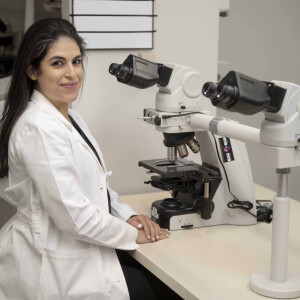
Highly skilled clinicians at RUSH MD Anderson Cancer Center diagnose, treat and prevent all types of skin cancer and other skin conditions. One treatment tool at their disposal is Mohs micrographic surgery, an advanced, minimally invasive and highly effective treatment for skin cancer.
In this podcast, Mariam Mafee, MD, the division chief of Dermatological Surgery at Rush University Medical Center and a Mohs micrographic surgeon at RUSH MD Anderson, discusses how and when to use Mohs surgery, its advantages, as well as how this type of surgery continues to evolve.
“We use appropriate use criteria (AUC), which helps separate less severe from more severe cases of skin cancer. This helps to maximize the utilization of Mohs surgery. We don't use Mohs surgery for every single skin cancer patient or every single skin cancer case. There are times where it really makes sense to be used and times where it doesn't. AUC, which you can find on an app, is a great help with this.”